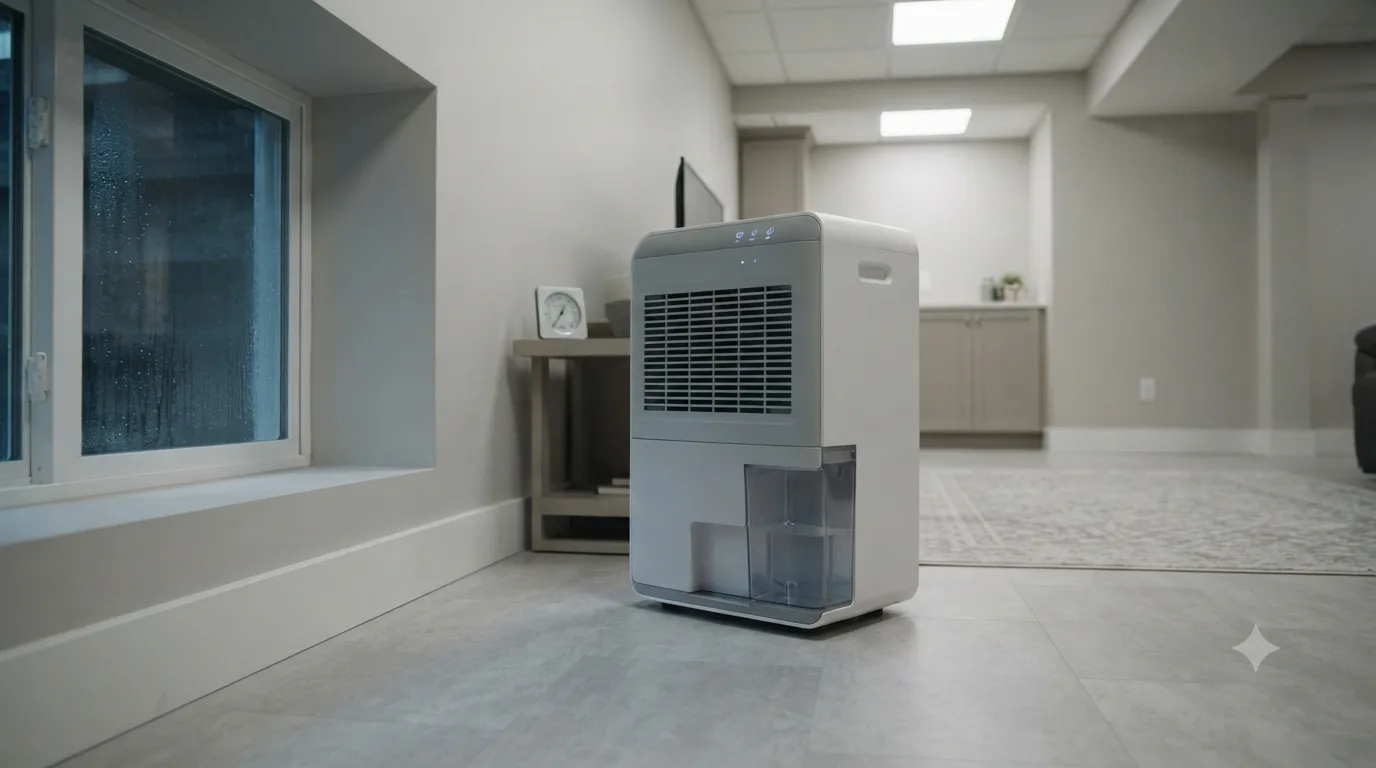
Dehumidifier Pint Ratings, Decoded
In 2019 the U.S. Department of Energy changed how dehumidifier capacity is tested — from 80°F down to 65°F, both at 60% relative humidity. Cooler test air holds less moisture, so the exact same physical machine now earns a lower official pint rating, generally 30-40% lower for portable units. An old "70-pint" dehumidifier is, roughly, today's "40-45 pint" model. We rank dehumidifiers by 2019-standard pint capacity and AHAM room-size/dampness sizing — not by price bands or star ratings — and we never invent a health claim about mold.
Nearly every "best dehumidifier" list explains the 2019 rating change in a paragraph and moves on. Nobody publishes the actual old-to-new conversion table, so shoppers keep asking the same question: is a new 50-pint dehumidifier the same as my old 70-pint one? Start with our named dataset, or pick a size below.
Small Capacity (20-22 Pint)
Closets, bathrooms, and single bedrooms. The 2019-rated 20-22 pint class is the rough equivalent of a pre-2019 '30-pint' machine.
3 picks →
Mid Capacity (30-35 Pint)
Living rooms and small basements at the 'very damp' AHAM level — roughly the modern equivalent of the old '50-pint' class.
3 picks →
Large / Basement (50 Pint)
Wet basements and crawlspaces. Today's 50-pint rating is close to what used to be sold as '70-pint' before the 2019 DOE test change.
3 picks →
Start here — one unit per capacity class
The pint number on the box changed meaning in 2019 when the DOE test conditions changed, so an older 50-pint and a current 30-pint can be the same machine. Size by the current rating, then these are the lead picks per class. Each links to a live Amazon search.
Frigidaire FFAD2233W1
22-pint (2019 DOE rating), ~1,500 sq ft moderately damp, ENERGY STAR certified, built-in pump option
One of the few small-capacity units with genuine ENERGY STAR certification under the current 65°F test, so the number on the box is directly comparable across brands.
Best for: Small-to-mid bedrooms, bathrooms, or closets in a moderately damp home
Watch out: The 22-pint rating is a 2019-test number — if you're replacing an old pre-2019 unit rated '30-pint,' this is roughly the equivalent capacity, not a downgrade, but the tank fills faster than a legacy '30-pint' machine's marketing implied.
Check price on AmazonNot deciding today? Add it to your cart over there — Amazon keeps it saved (and flags any price change) until you're ready.
GE TAD50EXT-equivalent 35-pint
35-pint (2019 DOE rating), ~2,000 sq ft very damp, ENERGY STAR certified, built-in pump, smart app control
ENERGY STAR-certified at the 35-pint (2019) tier with a built-in condensate pump, letting you drain uphill into a sink instead of emptying a bucket.
Best for: Living rooms or small basements at the 'very damp' AHAM level
Watch out: This is the modern equivalent of what used to be marketed as a '50-pint' unit before 2019 — if a listing calls it '50-pint' anywhere, confirm which test standard that number uses before comparing it to a genuinely 2019-tested 35-pint model.
Check price on AmazonNot deciding today? Add it to your cart over there — Amazon keeps it saved (and flags any price change) until you're ready.
Midea MAD50S1WWB-equivalent 50-pint
50-pint (2019 DOE rating), ~3,000-4,000 sq ft wet, ENERGY STAR Most Efficient, built-in pump, smart app + Alexa
Carries the ENERGY STAR 'Most Efficient' distinction (a higher bar than base ENERGY STAR) at the current 50-pint (2019) rating, with smart-home integration.
Best for: Wet basements or crawlspaces per the AHAM chart, where efficiency matters because the unit runs often
Watch out: This 50-pint (2019) unit is the rough equivalent of what was marketed as a '70-pint' machine before 2019 — if you're replacing an old 70-pint unit, this is likely the right size, not a downgrade, but confirm against your actual square footage and dampness level, not just the number.
Check price on AmazonNot deciding today? Add it to your cart over there — Amazon keeps it saved (and flags any price change) until you're ready.
Vremi 1595 (30-pint)
30-pint (2019 DOE rating), ~1,500-2,000 sq ft, continuous drain hose, 24-hour timer
A budget mid-capacity unit with a 24-hour timer and continuous-drain hose port for basement use without daily tank emptying.
Best for: Budget buyers with a moderately damp basement or large bedroom
Watch out: Not all listings clearly state whether the '30-pint' figure is 2019-tested — verify in the spec sheet, since a pre-2019-tested '30-pint' badge would mean meaningfully less real capacity.
Check price on AmazonNot deciding today? Add it to your cart over there — Amazon keeps it saved (and flags any price change) until you're ready.
Start with the conversion table
How we work
We're a research-based site: we analyze manufacturer specifications, DOE and ENERGY STAR published test-procedure and capacity records, and AHAM sizing conventions rather than physically testing every unit. We explain tradeoffs plainly, always name a downside, and report what a product is rated to remove — never a health outcome. Read our full methodology →